Originally posted on Nov 30 2023
Who are the Eight?
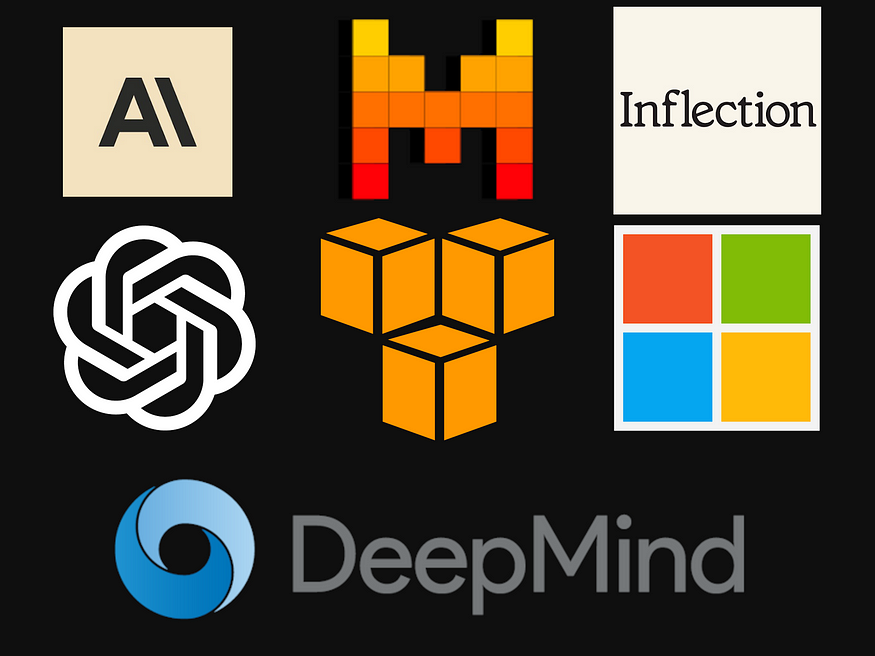
In his closing speech at the AI Safety Summit, Prime Minister Rishi Sunak spoke of an agreement with eight prominent AI companies, to test the safety of the next generation of AI models before they are released to the public, this was possibly the most successful outcome of Summit exactly one month ago.
Like the State of the Science Report mentioned in our earlier post, the AI Safety Institute will be where the testing will take place. The Prime Minister also referenced the creation of an “evaluations process” to assess whether these new AI tools adhere to current regulations and do not venture into chief areas of concern such as threats to National Security to dangerous opinions and bias built into their systems.
The other countries who are also a part of this agreement include the US, The EU, Canada, France, Germany, Italy, Japan, Korea, Singapore and Australia, though curiously not all the countries who signed the Bletchley declaration, most notably China.
There is speculation on how much access the agreement will afford the government.
Will the products under testing face any sanctions if they do not fully comply with this “evaluations process”?
The Financial Times have described the agreement as “legally non-binding” and the lack of hard details on the agreement on the UK Government website seems to support this.
One prominent issue that may not be covered by this vague agreement concerns whether the Government or any outside organization will be allowed access to the datasets in which these models are initially trained on. This is an issue that surrounds personal data that could be stored in these models and be used in contravention of GDPR and several Data Privacy laws.
Who are the Eight Companies?
OpenAI — The leading AI developers behind the groundbreaking Chatbot, Chat GPT, remain the biggest name in AI. Though the whole Sam Altman saga of being dismissed then returning may have been a wobble, it has now been corrected with the resignation of the board that ousted him and a strengthened alliance with Microsoft. Currently their products outside of ChatGPT include a roster of ever developing foundational models, most notable is the recent Text to Image Transformer, DALL-E, that turns text prompts into illustrations.
Microsoft — The giant of the computing world are the largest financial backer of Open AI and will no doubt produce a highly capable AI software within the next 6 months to a year. They currently offer a platform of AI services called Azure AI, providing everything you need to build your own machine learning models. They also provide their own specific applications such as Lobe, a free tool for data training your machine learning models.
Meta — Meta’s research lab has been boasted on social media by one employee as having “the largest open source and public research presence”, though their work has now been focused into integrating AI into their family of applications and the Metaverse. Their most prominent development to date is Llama 2, an open source large language model free to download and use as a foundation model.
However, with the timing of the Open AI saga and the recent decision to disband Meta’s Responsible AI team in favor of pursuing generative next gen AI, that they make be seeking to take the advantage and develop market ready tools.
Google DeepMind — From their chatbot, Google Bard, to older tools such as Google Brain and Google Assistant, Google have been a major player in AI for a long time; though their chief AI tool, Google Assistant, has often been outshone by other rivals in the market e.g. Microsoft’s Cortana, Apple’s Siri and Amazon’s Alexa.
Their AI company, DeepMind, is already fitting into the Prime Minister’s emphasis on safety with tools such as SynthID, which is able to digitally watermark AI generated images you produce to make it easier to identify copyright infractions and fake news. Their Universal Speech Model has been used to add captions in hundreds of languages, facilitating the spread of accurate information online. They are also to partner with the UK’s AI Safety Institute and are basing their European headquarters in the UK.
Mistral AI — A French startup that released it’s first language model, however unlike ChatGPT, it is open source with no API, so it can be integrated into your own app. The Mistral 7B model is an example of smaller models like Llama 2 that can perform better on focused tasks and is a sign of the high performance efficacy the French company will be going for.
Amazon Web Services (AWS) — Amazon’s On Demand Cloud Computing platform, similar to Microsoft’s Azure, have just released Q, an AI Chatbot designed for businesses to perform tasks like summarize large documents, auto generate charts and analyse data to further optimize time management.
Anthropic — Anthropic was started by ex- Open AI staff and has been funded by Amazon. Described as a ‘safety and research’ company, their altruistic mission statement may endear them to the Government’s new testing scheme. Their main success has been the next-generation AI assistant, Claude, it is used by Quora and Zoom, it incorporates interesting metrics such as ‘Brand Risk’ and they even offer a cheaper, faster sibling in Claude Instant.
Inflection AI — Inflection AI are a company that has released what claims to be the second best LLM, Inflection-2, which has outperformed Google’s PaLM Large 2 model and Meta’s Llama 2 on a set of different tasks.
 peoplebehindtech.com
Leave a Reply